| Discover Algeria | About us | Press area | Contact |


-
Legal INVEST
Les derniers textes juridiques
View more
Les interviews By AlgeriaInvest
Newsletter


Subscribe to the economic newsletter
- News
NEW NEWS
- Our Services
- News






July 17, 2025 | 1 month ago


Cooperation between GICA and the South Koreans for a project unique in Africa
In recent years, reducing greenhouse gas emissions has become a key element in the development policy of the state-owned cement group GICA. This approach is driven by changes and mutations in the international market, whose consumption model is increasingly oriented towards environmentally friendly products.

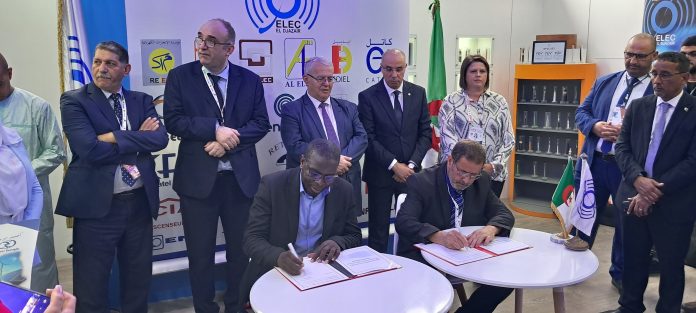
To adapt its production to environmental standards, the state-owned GICA group is calling on South Korean expertise in decarbonization. This is a new battle undertaken by the public group after having met the challenge of improving its production. And to succeed in this endeavour, the group will need to master the cutting-edge technology available in Korea. The two parties are moving towards the launch of a strategic partnership in this field, the first of its kind on the African continent, according to the Korean side.
A memorandum of understanding was signed last Thursday between the GICA Group and the Korean Cement Association (KCA). The memorandum aims to draw up a "roadmap for a cement industry aligned with Algeria's national priorities and climate commitments", according to a press release from the Korea International Cooperation Agency (KOICA). Under this agreement in principle on cooperation in decarbonizing the cement industry, "the two parties have agreed to form an operational committee to oversee implementation over the next two years", adds the same source.
The climate issue has been part of the Group's policy for several years now. According to its managers, GICA has invested heavily in installing equipment to reduce polluting activities in its 13 units. This year, the focus is on recycling waste for reuse in various activities, thus protecting the environment and preserving natural resources.
The GICA Group, whose products are now found in many parts of the world, continue its conquest of the international market, particularly in Europe. In addition to Italy, Spain and Great Britain, the GICA group aims to win new markets on the Old Continent, which, from 2027, will introduce new environmental standards for several products, including cement. This is a strategic step for the group's future, which has made exports a key business objective. This approach is part of the government's drive to replace imports with domestic products and promote non-hydrocarbon exports, diversifying the country's foreign currency resources.
July 20, 2025 | 
Popular Articles
